LSM Trees
Log-Structured Merge-tree is a data structure that's optimized for write-heavy workloads.
B-Trees are really good for reads. When it comes to writes though, the index needs to be updated and data has to written to the disk. Sometimes even multiple pages needs to be updated when index re-balances.
- Log-structured - because all transactions are just appended to the memory table.
- Merge-tree - Data is then merged into different SSTables on disk.
How SST works?
- Each table has it's own set of SSTables
- Every file has string stored data.
- Sorting happens based on the key specified for the table.
- An SSTables spans across multiple disk pages.
- There exists also an index in each SSTables file which says which range of entries are on which page.
How Log-Structured file works?
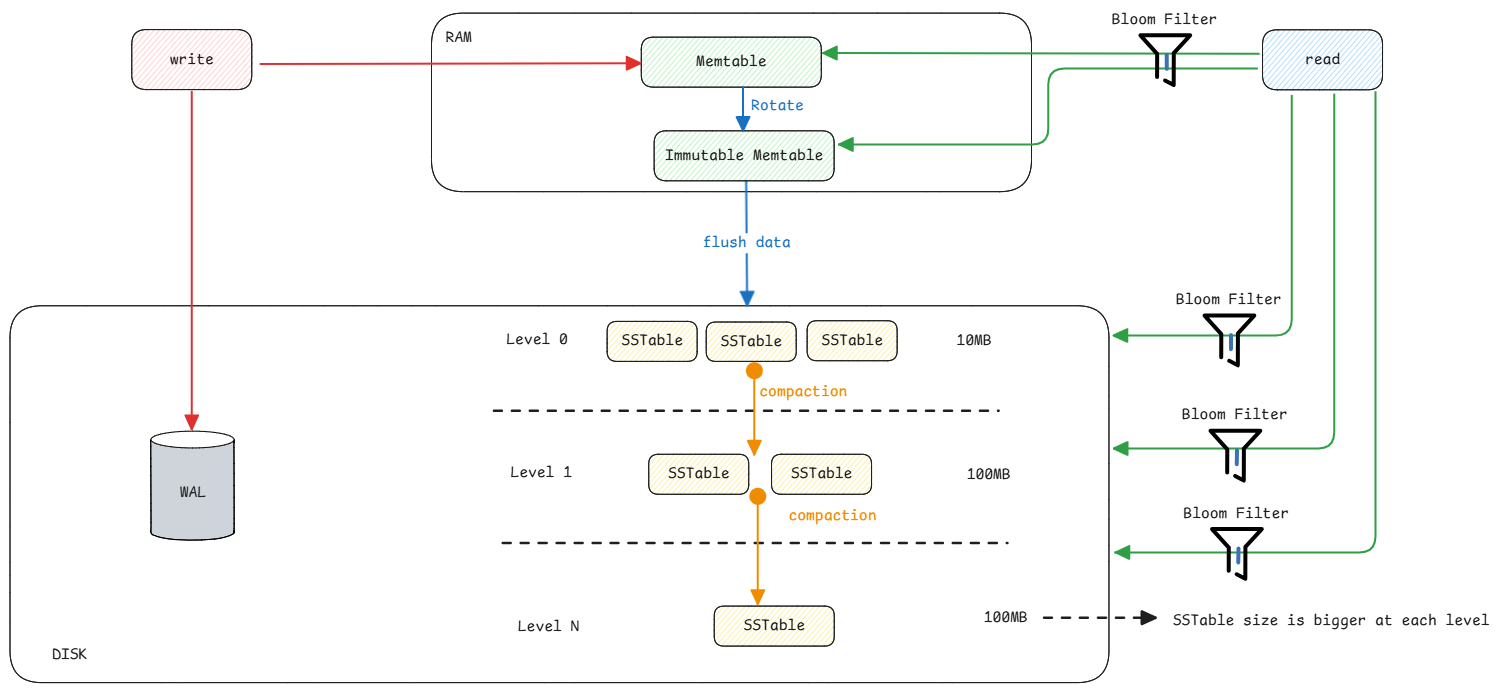
The data is just appended like a log to the mem-table. The mem-table is actually a tree though. Every insert just re-adjusts the tree.
How's reading and writing not blocking?
-
Writing is always non-blocking because the write goes atomically to WAL and to the mem-table. When the mem-table is full, it's locked scheduled for flush. A new mem-table comes into force. The flushing and compaction runs in background without blocking any writes.
-
Reading is also always non-blocking because reads are go the old mem-tables until they're flushed to L0. Even for other levels, the read queries goes via old bloom filters and old SSTables until the flush and compaction has created new files and deleted the old ones.
Even though every compaction leads to a new SSTable file created, not all files are recreated at a single time. It happens in an incremental fashion and bloom filter is also recreated whenever there is a new file.